
TEPCO Logo Story, 1987
Kazumasa Nagai's 1987 logo for Japanese energy company TEPCO.


This post is supported by LogoArchive – The home of historical logos. Discover over 4000 of history’s greatest designs from the world’s finest designers. Updated every single day. Always find the logo inspiration you need for your next logo or branding project. Start here.
Tokyo Electric Power Company (TEPCO) was established in Japan as one of nine America-backed government monopolies that would oversee and facilitate the rapid recovery of infrastructure which had faced devastation during World War II.
Despite playing a key roll in bringing electricity back to Kantō region, Yamanashi Prefecture and the eastern side of Shizuoka Prefecture (which included Tokyo) by the 1980s few people in these regions had much interest in who their supplier was, or what kind of company it proposed to be.
In order to clarify and communicate a ‘new management style’ inside and outside the company and establish an attractive corporate image as people began to take more interest in energy issues, TEPCO commissioned the development of a new corporate identity, handing the responsibility over to Nippon Design Center (NDC).


TEPCO’s renewed vision of ‘comprehensive strength’ and ‘dynamism’ was part of a drive to better align internal activities with external expectations, and uniquely express this in a clear and compelling way. Further, and alongside a new logo and corporate identity, which would be designed by NDC’s Kazumasa Nagai, the new image would ‘instruct the public as to its activities and ideals’, ‘dispel the incorrect assumption that it was a government agency’ but in private hands intent on helping people. With these concerns and considerations in mind, Nagai thus drew up concepts around notions such as ‘family’, ‘warmth’ and long-term ‘security’. This last sentiment would later form the basis of the taglines ‘Energy that opens up tomorrow’ and ‘Toward a dream-filled society’.
Concepts put forward were composed from a combination of circles, balancing positive and negative space. The circles and their relationship to one another were described as being representative of a ‘flexible mind’, ‘harmony with the environment’ and ‘expansion into the future’.
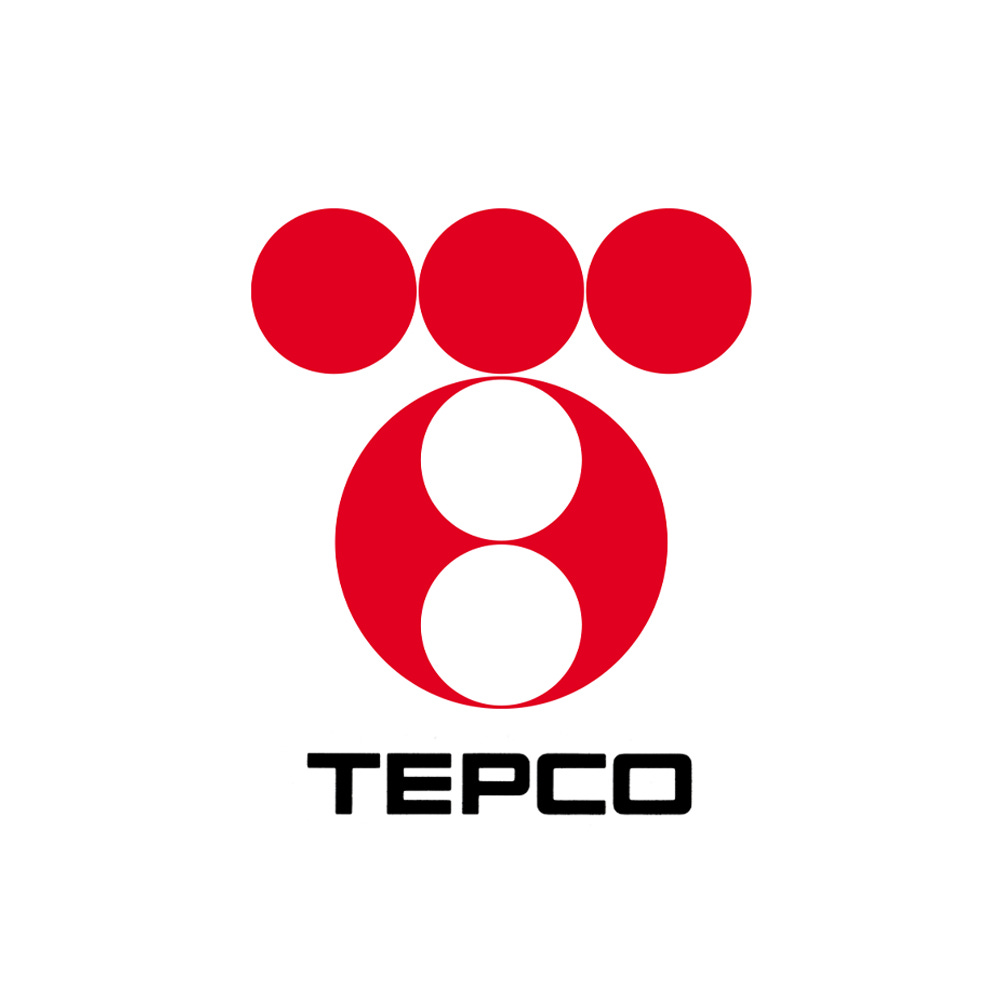
The final design, employing a combination of six circles, two of which were set within another larger circle, formed an abstract ‘T’ and sought to evoke the feeling of a family nesting in a bright warm home lit and heated by electricity. This sense of warmth was furthered through the use of ‘crimson’, which was said to suggest ‘vigour’, ‘friendliness’ and ‘brightness’.

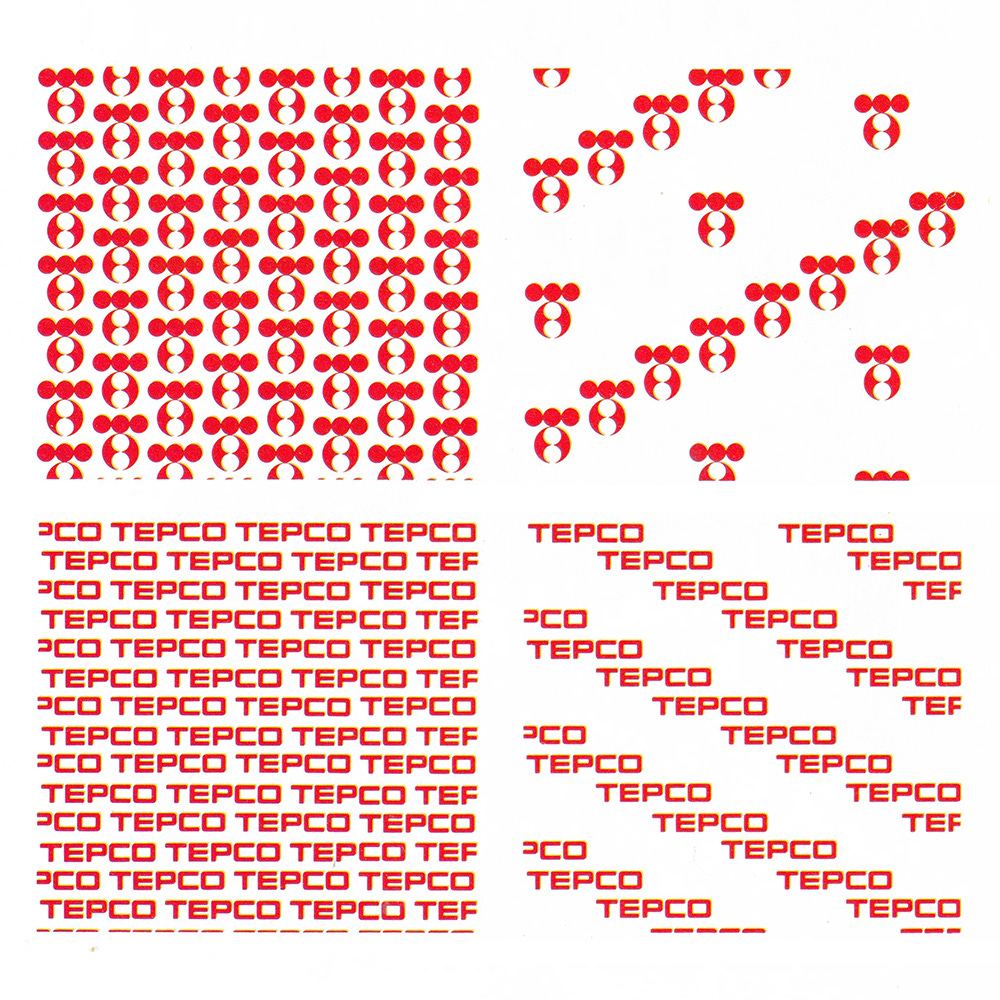
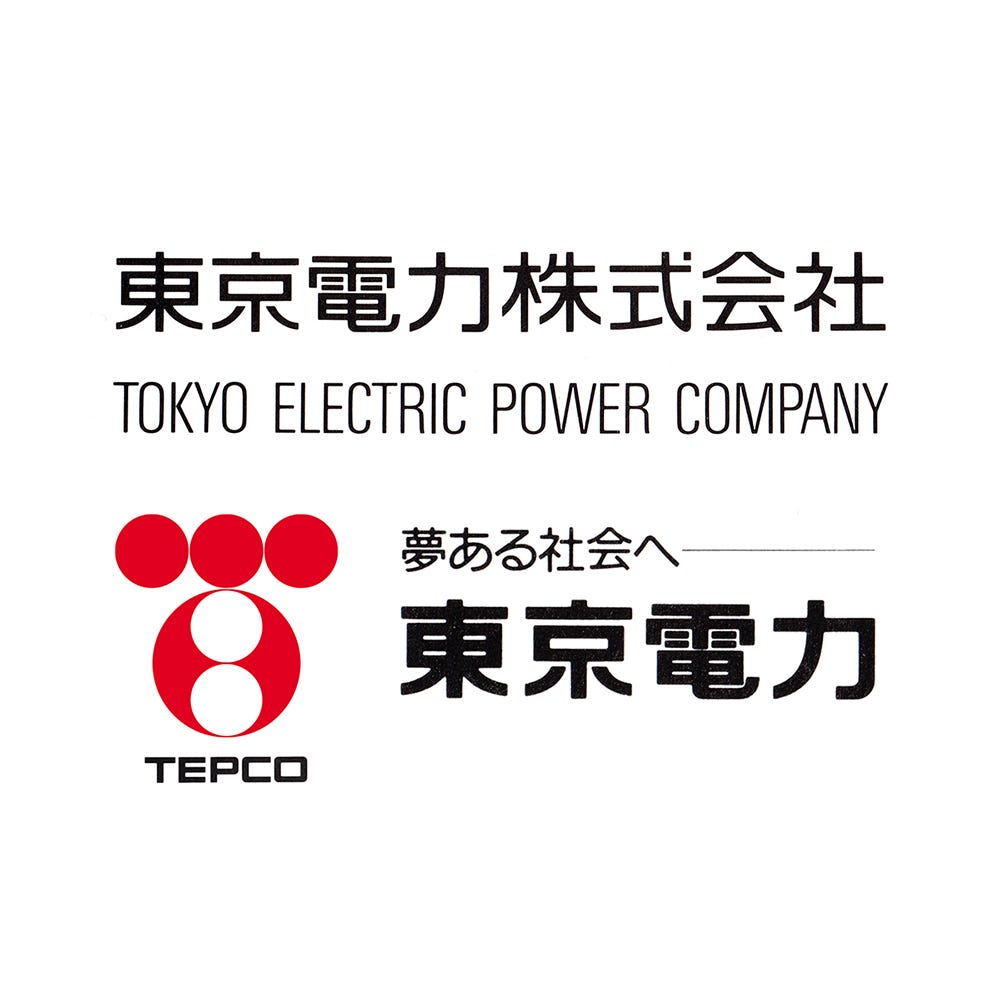
The new logo, which would be later named the ‘Harmonic T’ internally by staff, alongside other elements such as a silver diagonal section and crimson line was applied to corporate communications and equipment. These included truck livery, bags and manhole covers, and even appeared across a range of Tomy toys for children as part of a drive to be visibly present within the home.


TEPCO would later be responsible for the Fukashima nuclear power plant in 2011, which experienced catastrophic failure following an earthquake. Many took aim at the company, with defaced versions of the logo becoming a expression of their anger. The graphic and geometric formalities of the logo became a convenient basis for a variety of toxic imagery.
The deregulation of the electricity retail market in 2016 saw the eventual legal separation of the electricity power transmission and distribution sectors. TEPCO thus split to become three separate companies, ‘TEPCO Fuel & Power, Incorporated’ for the fuel and thermal power generation business, ‘TEPCO Power Grid, Incorporated’ for the general power transmission and distribution business, and ‘TEPCO Energy Partner, Incorporated’ for the electricity retail business.
The logo devised by Nagai was replaced by a wordmark, and an infinity motif was used as the symbol of TEPCO Power Grid. This was chosen to express the company’s intentions to continue to provide a stable supply of electricity and a guarantee of neutrality and fairness in the general power transmission and distribution business.
Thank you for subscribing to Logo Histories. If you enjoy reading this you may also enjoy these resources from the same team:
New! Wittl – Job posting and applicant tracking tool for design studios.
Brand Archive – Research tool for brand designers.
LogoArchive Website – Searchable modernist logo archive & research tool.
LogoArchive Shop – Vintage design books & LogoArchive Zines.
BP&O – Contemporary design editorial.