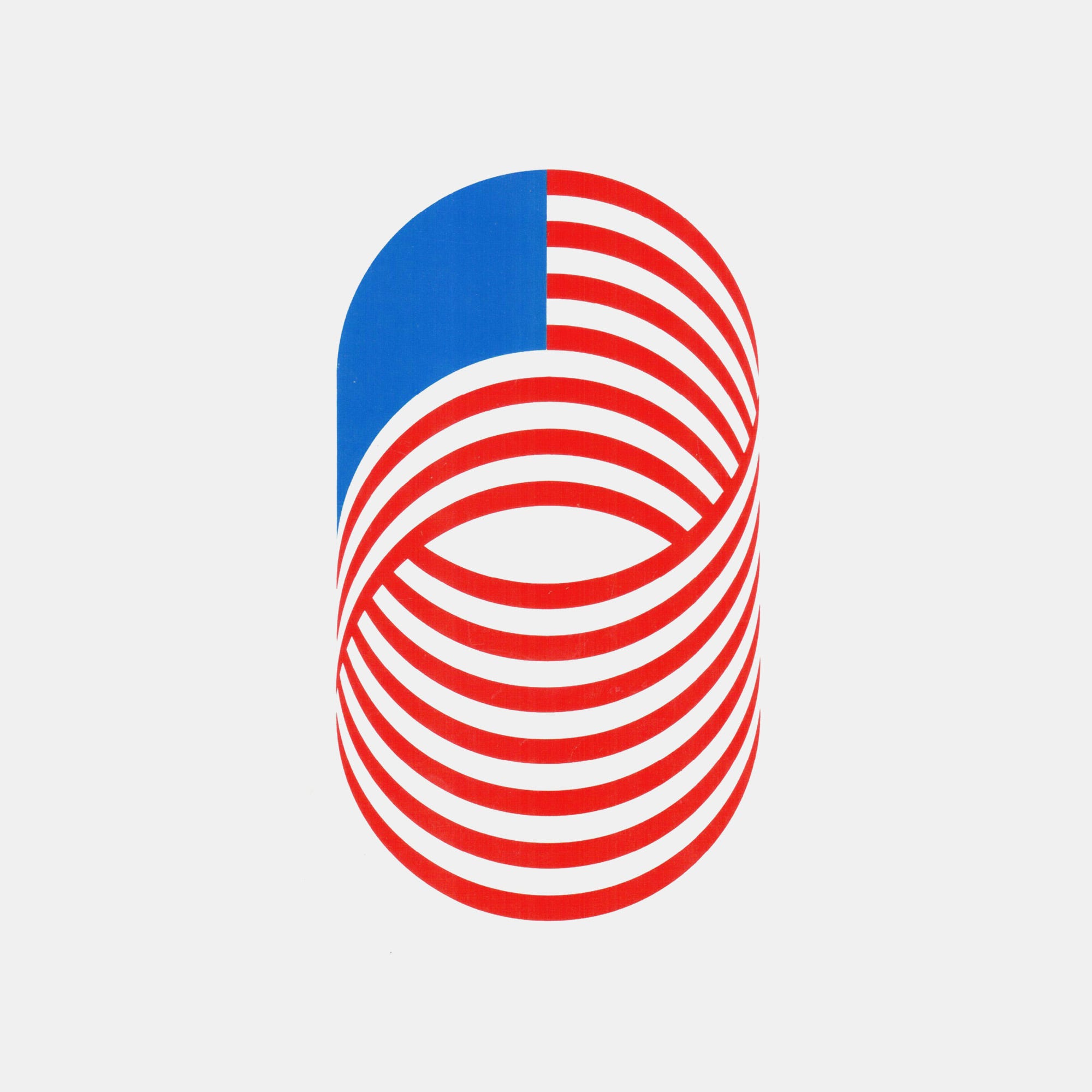
The Slinky
Lance Wyman's logo for Industrial Design in the USA
This post is supported by LogoArchive – The home of historical logos. Discover over 5000 of history’s greatest designs from the world’s finest designers. Updated every single day. Always find the logo inspiration you need for your next logo or branding project. Start here.
Industrial Design USA exhibition was part of a cultural exchange program with the USSR that by the 1970s had included exhibitions on Ecology, Graphic Arts, Research and Development, and Textiles. Industrial Design USA intended to focus on the benefits of good design and the varied fields of design. This would be illustrated by a variety of consumer products readily available in the US. The exhibit would then tour a number of cities of the former Soviet Union including Moscow, Kiev and Leningrad.
Just like other exhibitions, a symbol was sought out to help promote it. George Nelson Office was selected by the United States Information Agency (USIA) to develop a visual concept for the exhibition. This would primarily be used for the brochure cover, but also across other promotional items such as badges.
Lance Wyman worked to bring George Nelson’s brochure text to life with images, and develop a symbol for the exhibition, generating many ideas. However, in the words of Wyman, none of the concepts seemed to do the trick.
The USIA officer in charge of the exhibition suggested designing something clever like a slinky, a toy that was industrial in nature, and would continue to move once given sufficient energy.
With this in mind Wyman combined a moving spiral, inspired by a slinky, with the form and colours of the American flag. This gave the flag an endless energy, like a slinky and a mobius strip, which was perfect for the theme of the exhibition.
On-site distribution of brochures and buttons proved to be popular with the audience and quickly became collectors items. All 15,000 brochures and 5,000 buttons were gone in the first few days of the 10 day exhibition.
Thank you for subscribing to Logo Histories. If you enjoy reading this you may also enjoy these resources from the same team:
Brand Archive – Research tool for brand designers.
LogoArchive Website – Searchable modernist logo archive & research tool.
LogoArchive Shop – Vintage design books & LogoArchive Zines.
BP&O – Contemporary design editorial.


