


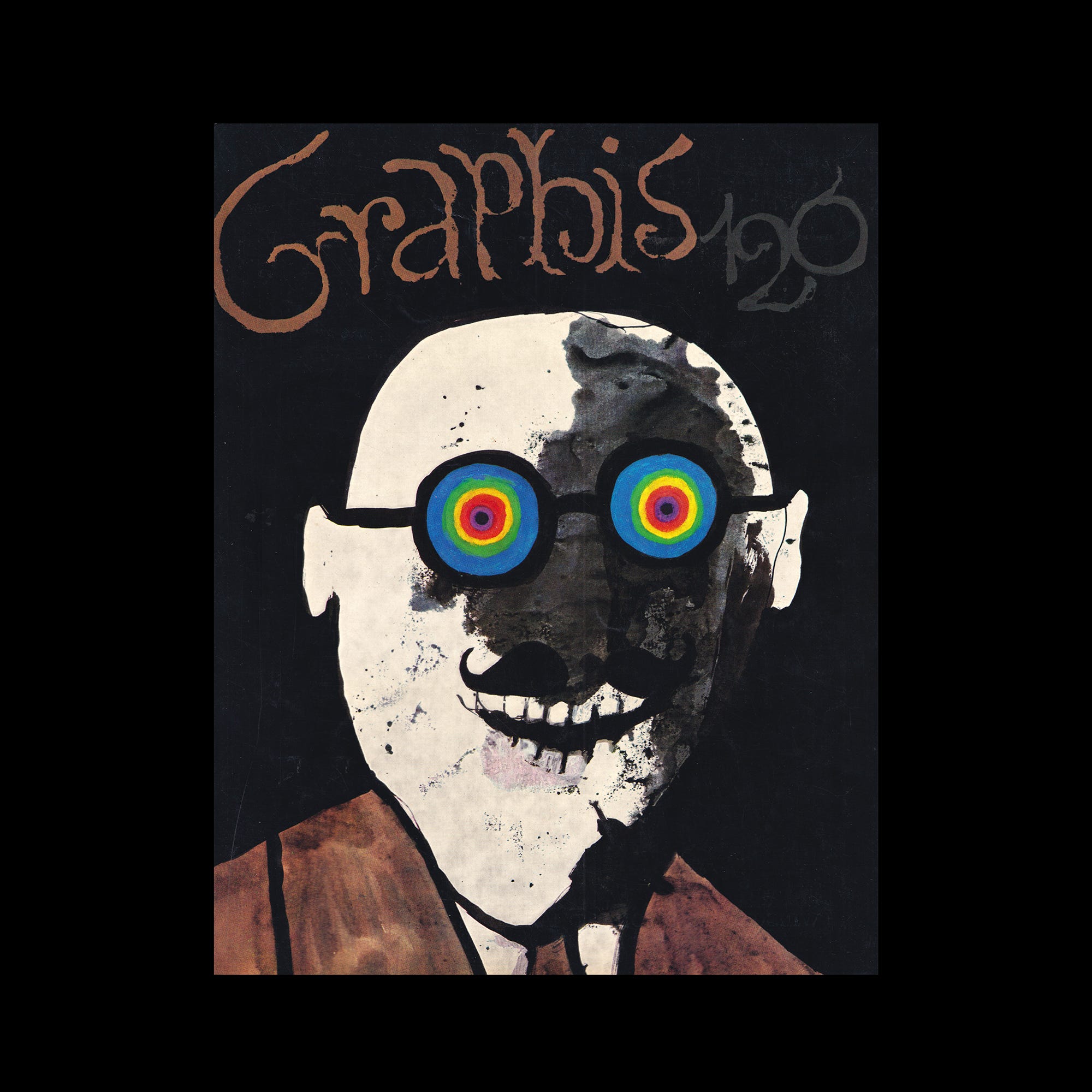
The following is an article published in Graphis 120, 1965. In it, Heiri Steiner pays tribute to O.H.W. Hadank.

The memory of Hadank is a cheering and heart warming one: his imposing stature, his calm and powerful personality, his deep and melodious voice. The spell he cast was that of a man who is unwaveringly convinced of the rightness of what he is doing. He exerted a certain fascination upon us young art students. What this brilliant and vital artist was creating was not the huge poster or the outsize trade mark; he busied himself instead with small and delicate work, chiselled to a fine perfection. It was great only because of the balance of its elements, the harmony of its lines, surfaces, caesuras. He wanted his solutions to any problem to satisfy lasting laws and thus to be independent of contemporary taste. He believed that the well-designed form has a language of its own that need not be loud in order to be heard. He never set out to impress, nor even to convince; he wanted to win the observer by pleasing. His own belief and confidence in the deep need for good form sparked over to his clients and ensured their approval of the somewhat reserved note that Hadank struck even in his advertising.
In all his design work Hadank preferred to use media derived from the traditional graphic techniques. He remained strictly true to the surface effect, never using even colour to create any sort of illusion. His works express a very definitely delineated attitude. They are personal, mirroring a forceful and intensely vital personality, although they disclose nothing of his individual experience. Indirectly, however, they bear witness to the position he took towards men and things. He regarded it as highly important that forms should have their rightful place in our life. That is no doubt why he expended his efforts on everyday tasks and objects.
Explore more like this in Famous Logo Designers and Studios →
Go behind the logos. Explore 200+ in-depth and meticulously researched logo histories revealing the designers, design decisions and ideas behind the world’s most iconic logos and important brand identities.
Hadank was born in Berlin in 1889, and from 1907 was for several years a pupil of Professor Doepler at the Roval Museum of Arts and Crafts in that city. He himself was Professor of Graphic Design at the University of Free and Applied Art in Berlin for thirty years, from 1919 till 1949. In 1950 he moved to Hamburg, where he worked till his death on 17th May 1965.

While he was active in many fields-the bodies of Horch motor cars are examples of his industrial design-his powers were most fruitfully applied to commercial graphics. Perhaps his very best work was done on the packings he designed for the cigarette manufacturers Haus Neuerburg, to whom he was art consultant from 1921 onwards. The unity he attained in the form, material, symbols and lettering of these packs is unique. Overstol«, Ravenklau and Löwenbrück all made a powerful impact when they appeared; they were new and original, and yet it seemed as though they must have been in existence for years. They can justly be classed as a pioneering achievement.
As a teacher Hadank had a considerable influence on the early generations of commercial artists. He contributed greatly to the creation of a language for the new profession, and he taught us to speak it clearly. His precepts were clean craftsmanship and respect for our materials, and with him these were never merely rhetorical requirements. For him, in fact, these qualities were the prerequisites, the only soil on which good work could thrive.
Want more in-depth articles? Check out LogoHistories’ other articles on classic logos and corporate identities →


Thank you for subscribing to Logo Histories. If you enjoy reading this short you may also enjoy these resources from the same team:
Brand Archive – Research tool for brand designers.
LogoArchive Website – Searchable modernist logo archive & research tool.
LogoArchive Shop – Vintage design books & LogoArchive Zines.
BP&O – Contemporary design editorial.