



The world’s largest cement manufacturer
Blue Circle Industries was formed in 1900 as the Associated Portland Cement Manufacturers Ltd from the amalgamation of 24 cement works. By the mid-1960s, following a period of international expansion, The Blue Circle Group had grown into the largest cement manufacturer in the world.
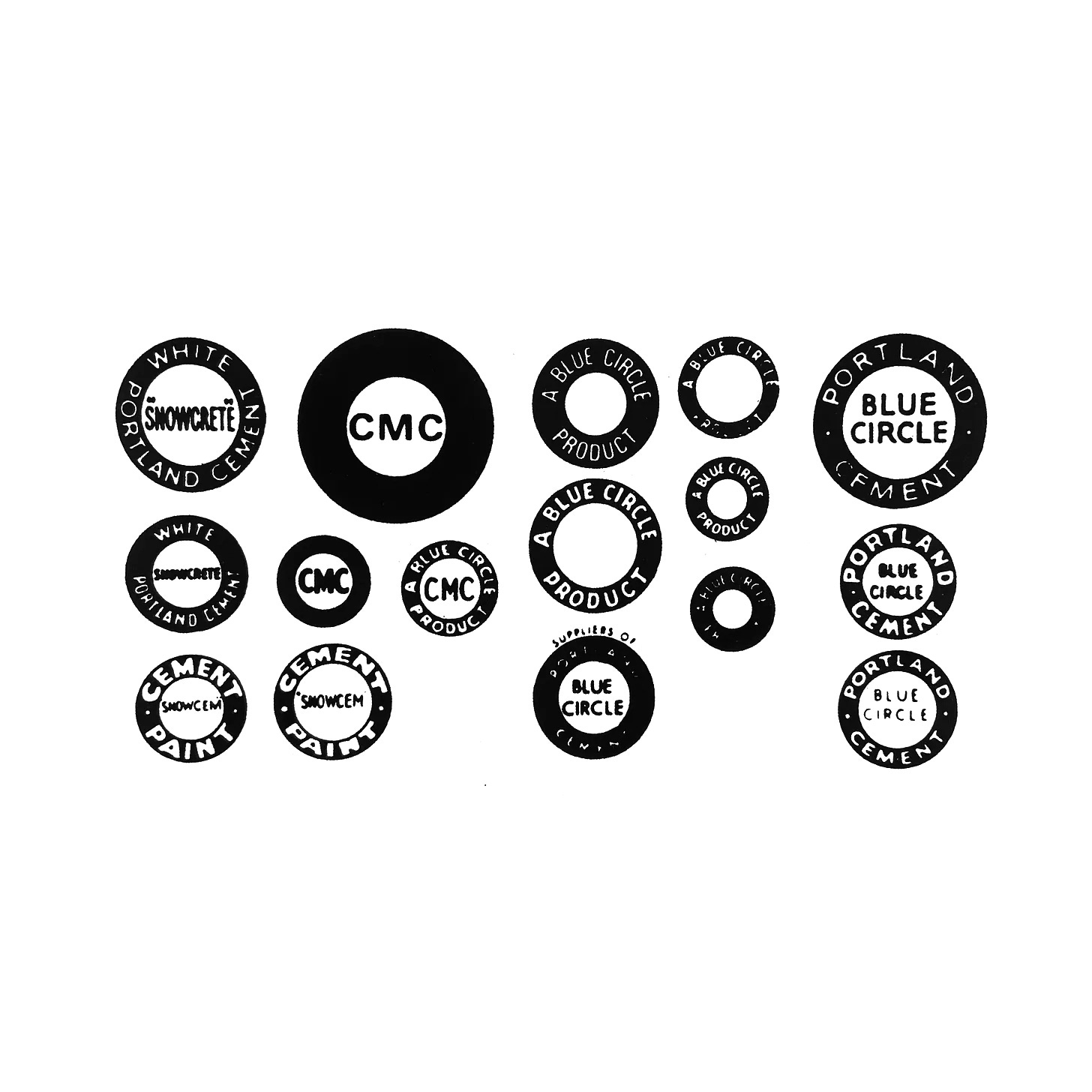
Located in Great Britain, the group was made up of parent company The Associated Portland Cement Manufacturers Ltd. (APCM) and its sales arm the Cement Marketing Company (CMC). The group also had a number of subsidiaries and allied companies that had created a complex tapestry of entities while post-war diversification had also created a broad range of products. The use of inconsistent trademarks and names, and the growing number of products had created a confusing and divisive situation for the group.
This is one of eight stories in our collection of the best industrial logos, from International Paper in 1958 to Kawasaki Steel in 1987.
Key Takeaways
A confusing tapestry
By the mid-1960s the Blue Circle Group was the world’s largest cement maker, but inconsistent names and trademarks created confusion.
FHK Henrion and HDA International
In 1966 the group commissioned HDA International, led by FHK Henrion, to develop a new corporate image.
Drawing on the past
The Cement Marketing Company’s existing blue circle trademark became the basis for the new identity.
Go behind the logos. Explore 200+ in-depth and meticulously researched logo histories revealing the designers, design decisions and ideas behind the world’s most iconic logos and important brand identities.

A new corporate image
The Cement Marketing Company, prior to 1967, had been using a blue circle as its trademark, and from this, various configurations had been introduced to hold together the subsidiaries and products.
In 1965 chairman John Reiss commissioned McKinsey & Company to analyse APCM's management structure and methods, and present a report detailing its findings, conclusions and recommendations.
The outcome of the report indicated that the management structure was inadequate for the future development of the company, concluding that there was no visible cohesion between the finance department, the works department and the sales department. And further, that this was having an adverse effect on the profitability of the company. The recommendations made by McKinsey & Company were not acted upon, however, in 1966 the company commissioned Henrion Design Associates International (HDA International), led by partner FHK Henrion, on the development of a new corporate image.

Continue reading to discover how HDA International refined the blue circle, its four tonal versions, Blue Circle Yellow and a custom typeface →
