


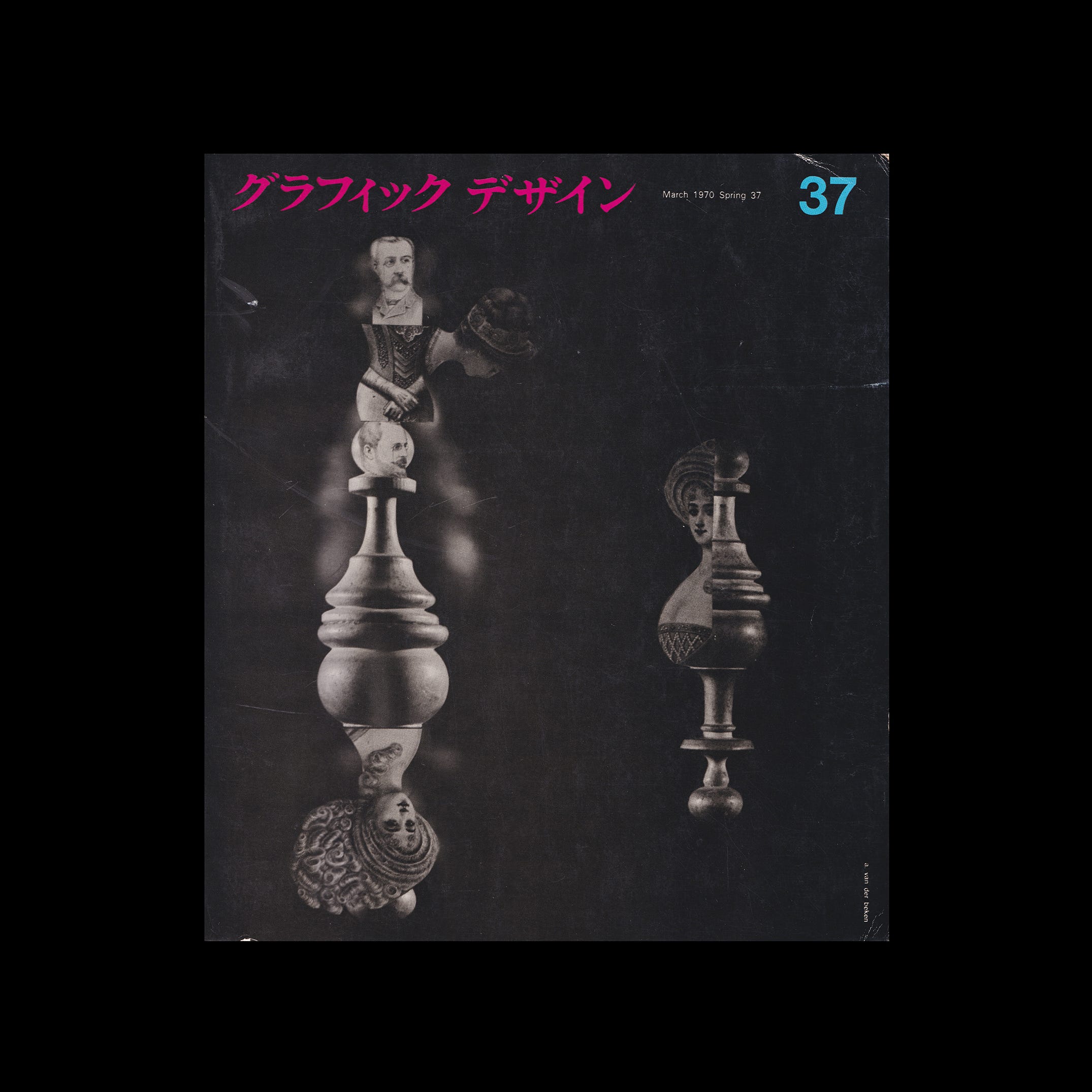
The following is an article published in issue 37 of the Japanese magazine ‘Graphic Design’.

EXPO'70. It was decided only in 1965 to hold this mammoth enterprise of state-level importance in Japan. Since then, a short period of less than five years has gone by, but the exposition has been completed and will be held from March 15 until September 13.
This exposition is said to have the largest number of participating countries and to be the largest in size of any world exposition in history. There will probably not be any larger undertaking in Japan for some time to come. Besides, this will be the first world exposition ever to be held in Asia.
Explore more like this in Olympic Logos →
Go behind the logos. Explore 200+ in-depth and meticulously researched logo histories revealing the designers, design decisions and ideas behind the world’s most iconic logos and important brand identities.
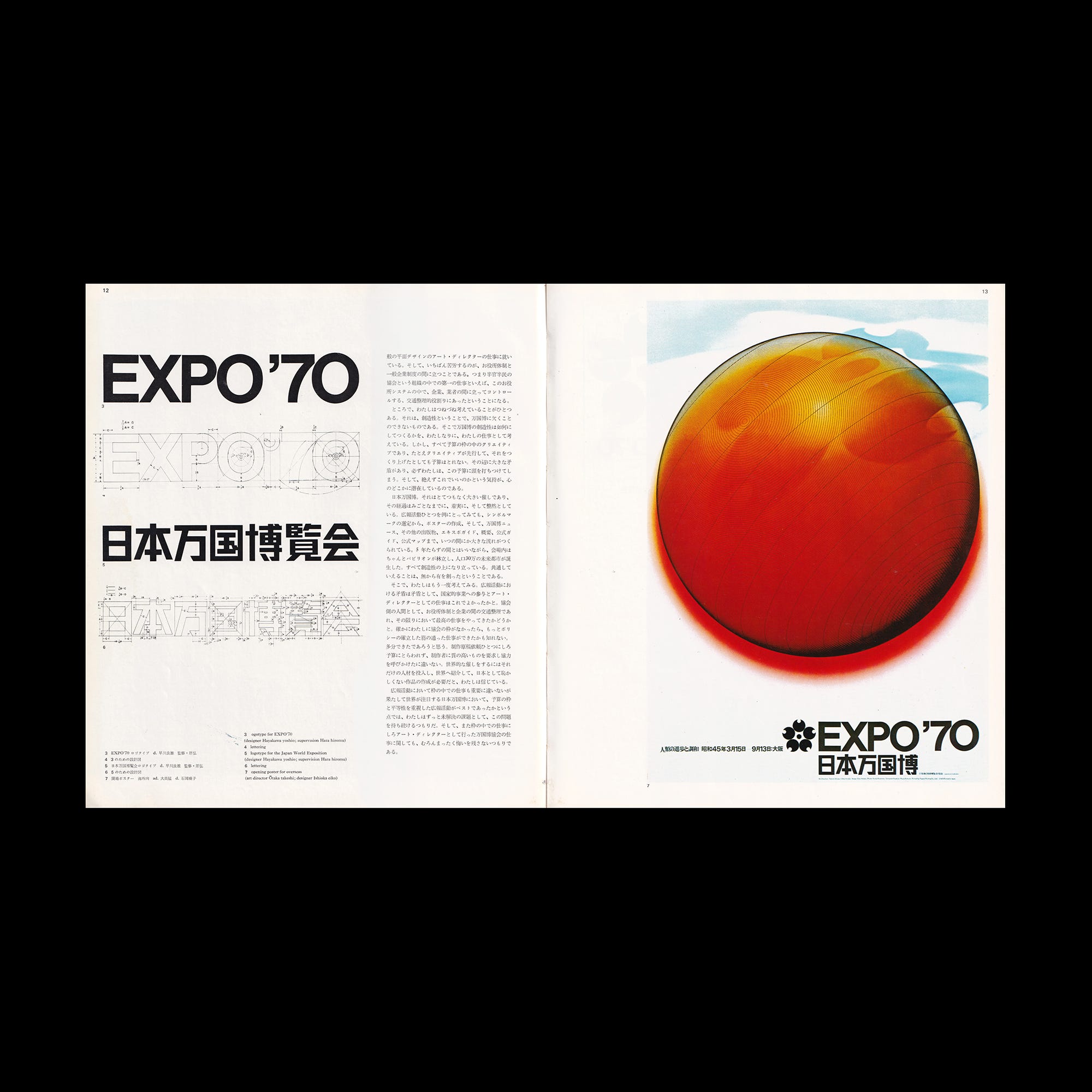
How was it possible for the EXPO'70 to make such great progress in only five years? Let me answer this by examining my own standpoint. First, a world exposition cannot be conceived as something with a definite, concrete shape. It is something supremely characterless and amorphous. EXPO'70 is entirely different from the Tokyo Olympics in this respect.
How is the exposition administered? The EXPO'70 Association is a motley organization consisting of experts lent from government agencies and private business. Each project is carried out in accordance with an annual budget, For instance, contractors are selected in the traditional, competitive manner on the basis of estimates of the costs.
As for the public relations activities, the basic policy is to advertise everywhere in the world and throughout Japan.
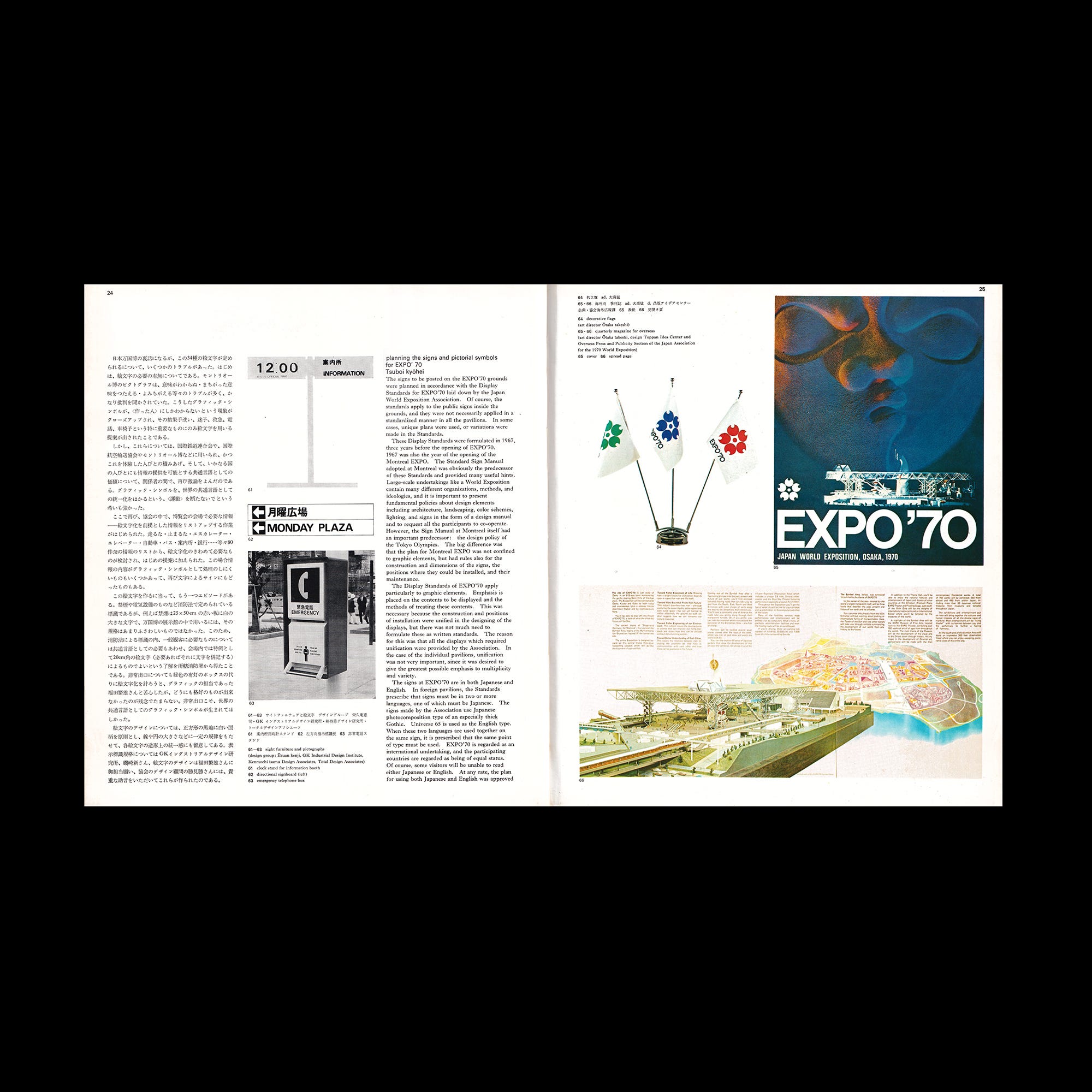
Our PR work in the mass media began in 1968 and is aimed at explaining about the world exposition while introducing its fascination. All countries, whether large or small, are treated with scrupulous equality regardless of the amount of their spending on their pavilions. National flags are all given equal space or are given equal treatment according to the U.N. system. In one sense, the Association merely provides spaces which are rented out to the participating countries and businesses. It acts as the over-all promoter renting out the spaces and welcoming the guests. Success or failure depends, not only on the number of participating countries, but in the final analysis on the number of visitors who come. To attract more visitors, the popularity of EXPO'70 must be enhanced.
The work of public relations is to spread a fascination with EXPO and to attract people to it. At the present time, our PR organization is set up as follows. Under the Association President is the Secretary General, under whom is the Assistant Secretary General. Under him are the department heads. Under them are the section heads, and under them are the bureau heads.
Under these are the officials in charge of actual projects. Katzumie masaru serves as consultant for flat design, and I am working as the art director for flat design of the Association. My biggest difficulty lies in my role as go-between between the governmental offices and the business enterprises. In other words, in this semi-official, semi-private sort of organization, one must first act as a sort of traffic director, standing between the officials and the businessmen and giving direction and control.
However, I have been constantly thinking about one thing: creativity. This is indispensable in a world exposition. How can one attain creativity when one is confined within the framework of a budget? A creative work will be quite useless if there is no way of allotting a budget for it. I am constantly coming into conflict with this matter of the budget. Somewhere in my heart there always lurks the question: Is this good enough?
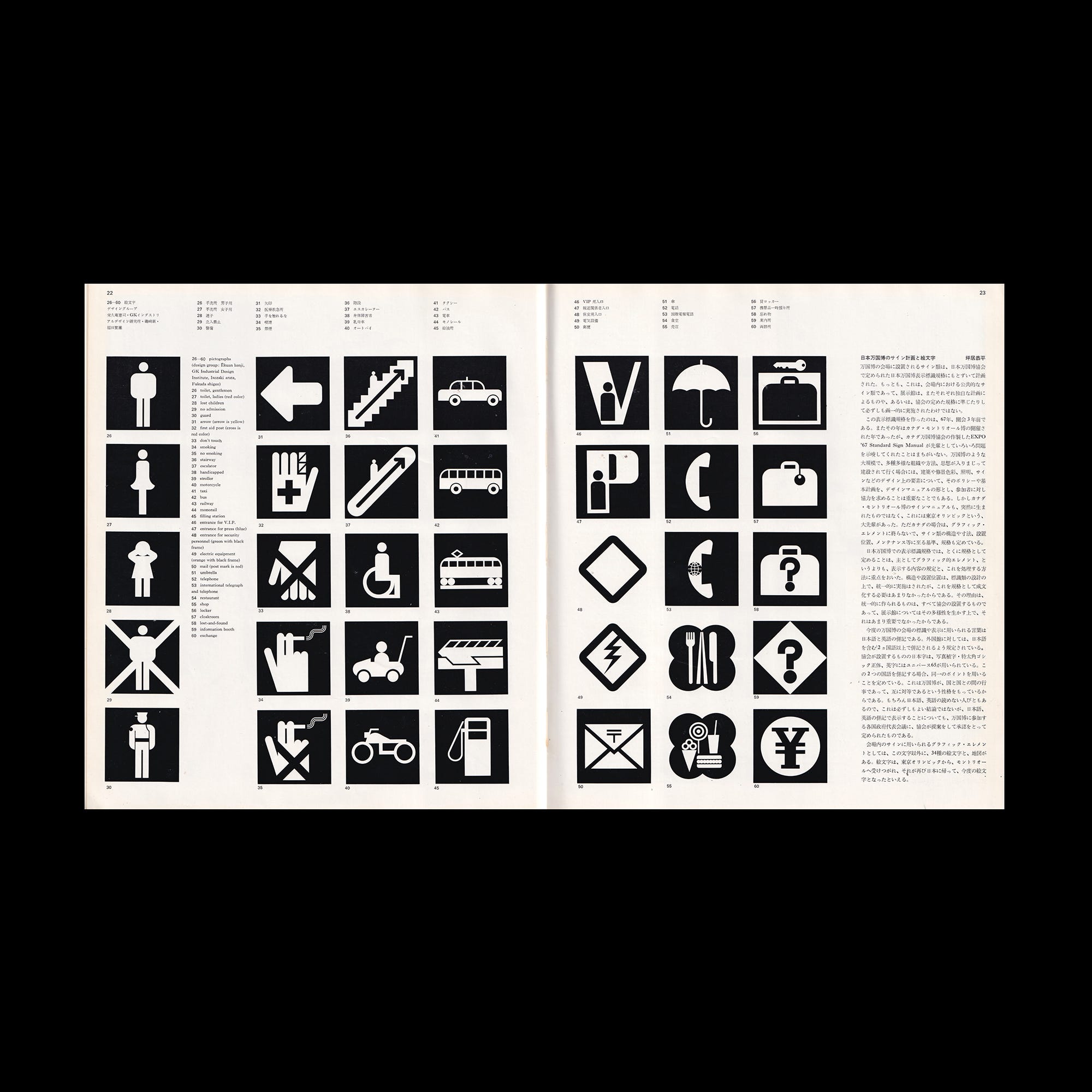
EXPO'70 is an immense undertaking, and it is moving ahead with remarkable accuracy and orderliness. For instance, in the public relations work, an immense amount of work was completed before one realized it. The symbol marks were selected; posters were designed; and EXPO news and other publications such as EXPO guides, outlines, official guides, and official maps, were all edited. Although less than five years has gone by, the pavilions are already standing inside the grounds, and a city of the future, with a population of 300,000, has already come into being. All of this is based on creativity. The common denominator is the fact that something has been created out of nothing.
I ask myself again: Is this good enough? Could it not have been a little better? Apart from the contradictory elements in the public relations work, were the patterns of participation in this state- level enterprise correct? Was the work of the art director done correctly? Even though our work may have been like that of a traffic director between the government offices and business, did we in the Association do the best possible work within the given limitations? If I had not been confined by the framework of the Association, I may perhaps have been able to accomplish work truer to principle. In fact, I very probably would have been able to do so. When commissioning a design, I would have been able to ignore the budget and to appeal to the designer for cooperation in creating something of the highest quality. In an undertaking of world-wide significance, I believe that all the available talent ought to be mobilized and introduced to the world. It is necessary to create works which will not put Japan to shame.
In PR work, the work done within the given framework is of course important. However, in EXPO'70, did our PR work, confined within the budgetary framework and emphasizing equality, accomplish the best possible results? I intend to leave this question unanswered. Even though the work was done within such a framework, I naturally will have no regrets concerning the work of the art director for EXPO'70.
Want more in-depth articles? Check out LogoHistories’ other articles on Expo logos →


Thank you for subscribing to Logo Histories. If you enjoy reading this short you may also enjoy these resources from the same team:
Brand Archive – Research tool for brand designers.
LogoArchive Website – Searchable modernist logo archive & research tool.
LogoArchive Shop – Vintage design books & LogoArchive Zines.
BP&O – Contemporary design editorial.