


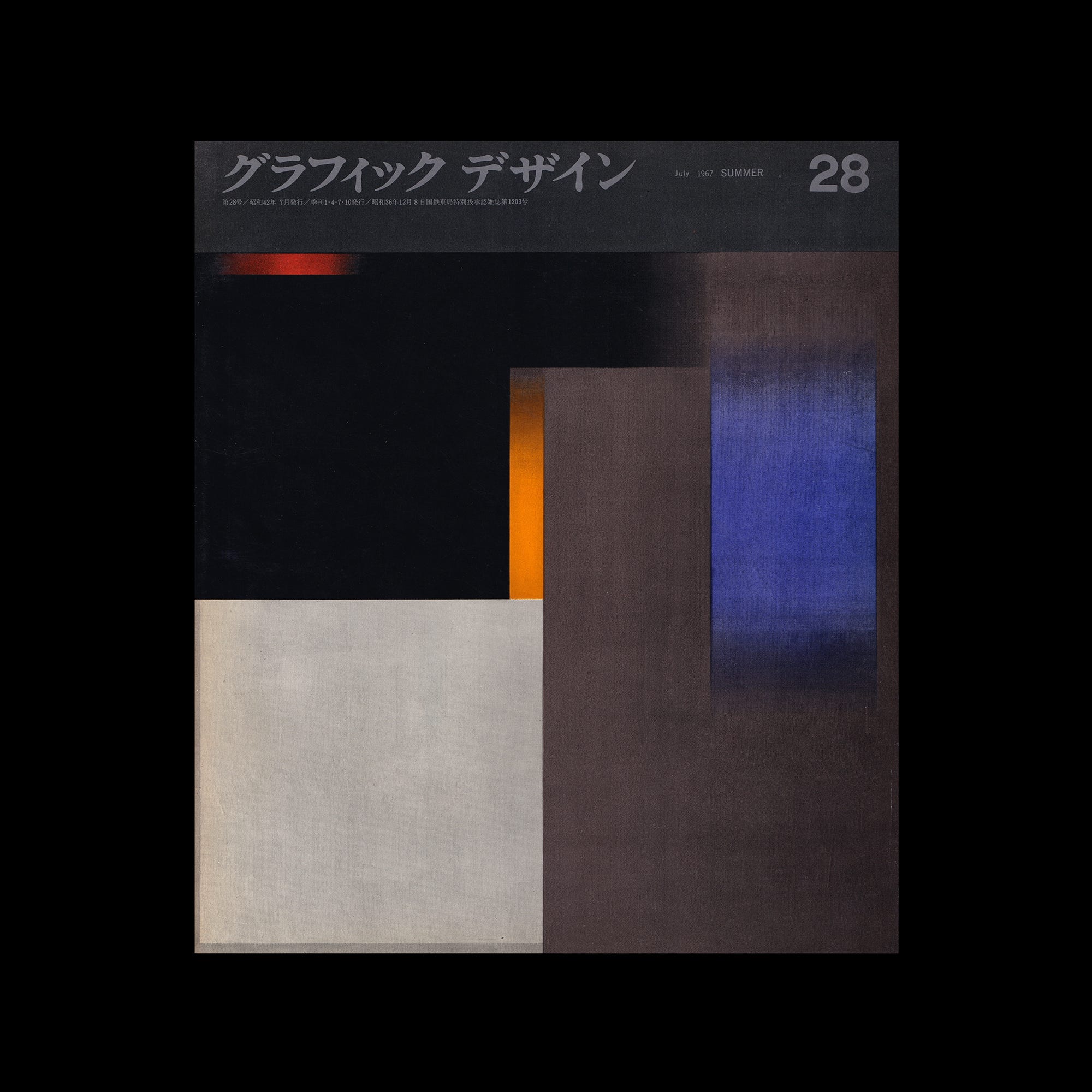
The following is an article published in Graphic Design 28, 1967. In it, Katzumie Masaru writes about Shigeo Fukuda’s one-man show in New York.

Fukuda Shigeo's one-man exhibition called "Toys and Things Japanese' was on view from May 1st to June 10th at the IBM Gallery on 57th Street in New York. At the exhibition hall divided into three small rooms 175 objects were shown.
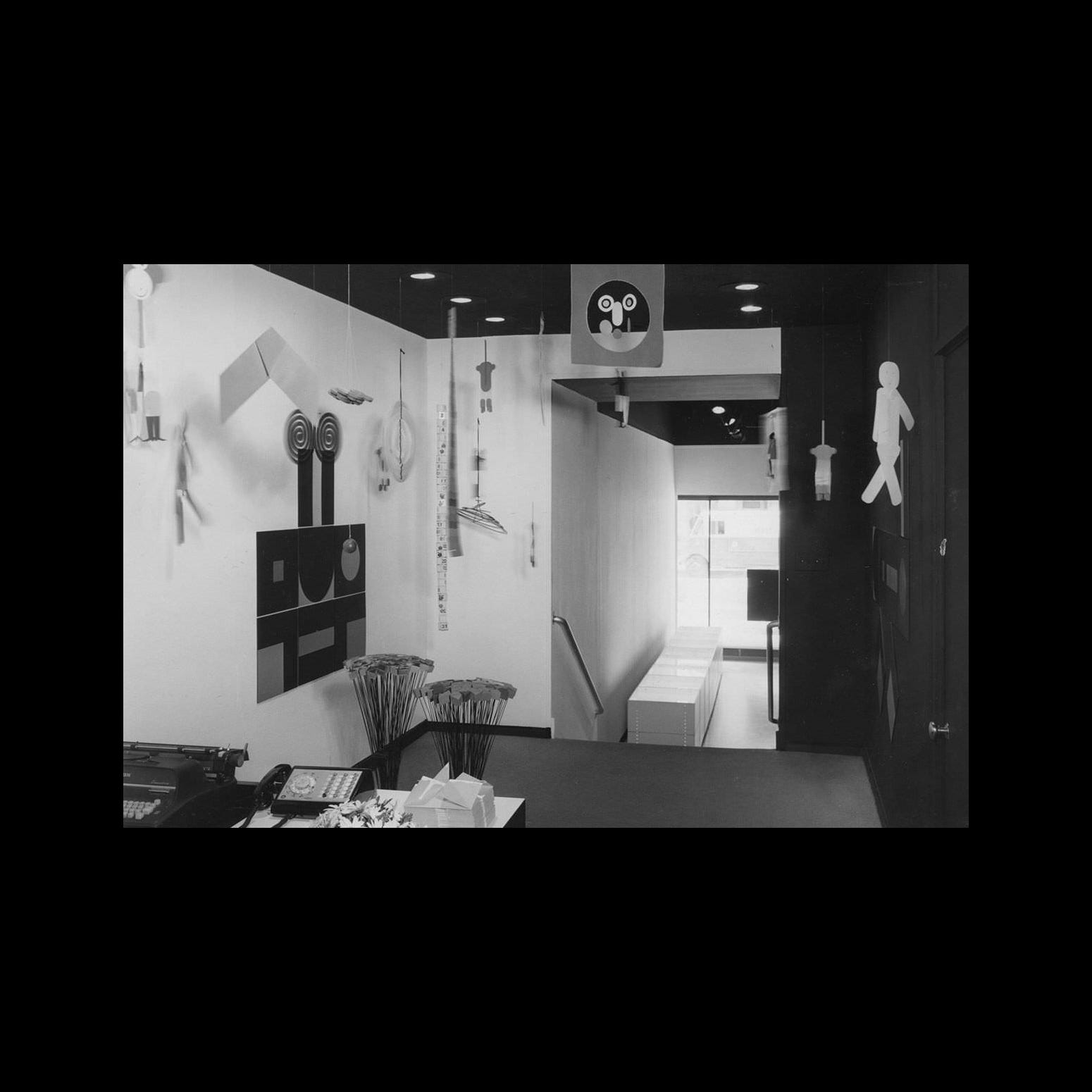
There have been more than 10,000 visitors summed up till May 26th. Daily visitors average about 500. This is a great success for an exhibition of this kind. This exhibition found such a kind echo in journalism there that the New York Times, New York Post, the New Yorker, 57th Street Review, the Villager, and "Cue" devoted space to the introductory accounts of this exhibition. I was informed that the 'Industrial Design' magazine would publish a special number on Fukuda's one-man exhibition. This one-man exhibition owes much to the great kindness of Paul Rand, an advisor in design to IBM. He was so much interested with Fukuda's works introduced in the 21st issue of this magazine that he had a correspondence as to how to get his works with Mr. Kobayashi of Zokeisha Publications Ltd., which paved the way for his works being introduced abroad.
Explore more like this in Famous Logo Designers and Studios →
Go behind the logos. Explore 200+ in-depth and meticulously researched logo histories revealing the designers, design decisions and ideas behind the world’s most iconic logos and important brand identities.
Such being the case, he wrote letters of recommendation of his own accord, and as to the organization of Fukuda's exhibition, he gave various considerations. Particularly, the display cases used in the exhibition, designed by Paul Rand, were so versatile that they could be used arranged, stacked or hung on the wall. Plexiglass shelves permitted objects to be lighted from below and could be adjusted to various levels, depending on the sizes of the objects. When such lighting was not required, white lacquered plywood could be used.
The following are some of the press comments on Fukuda's exhibition.
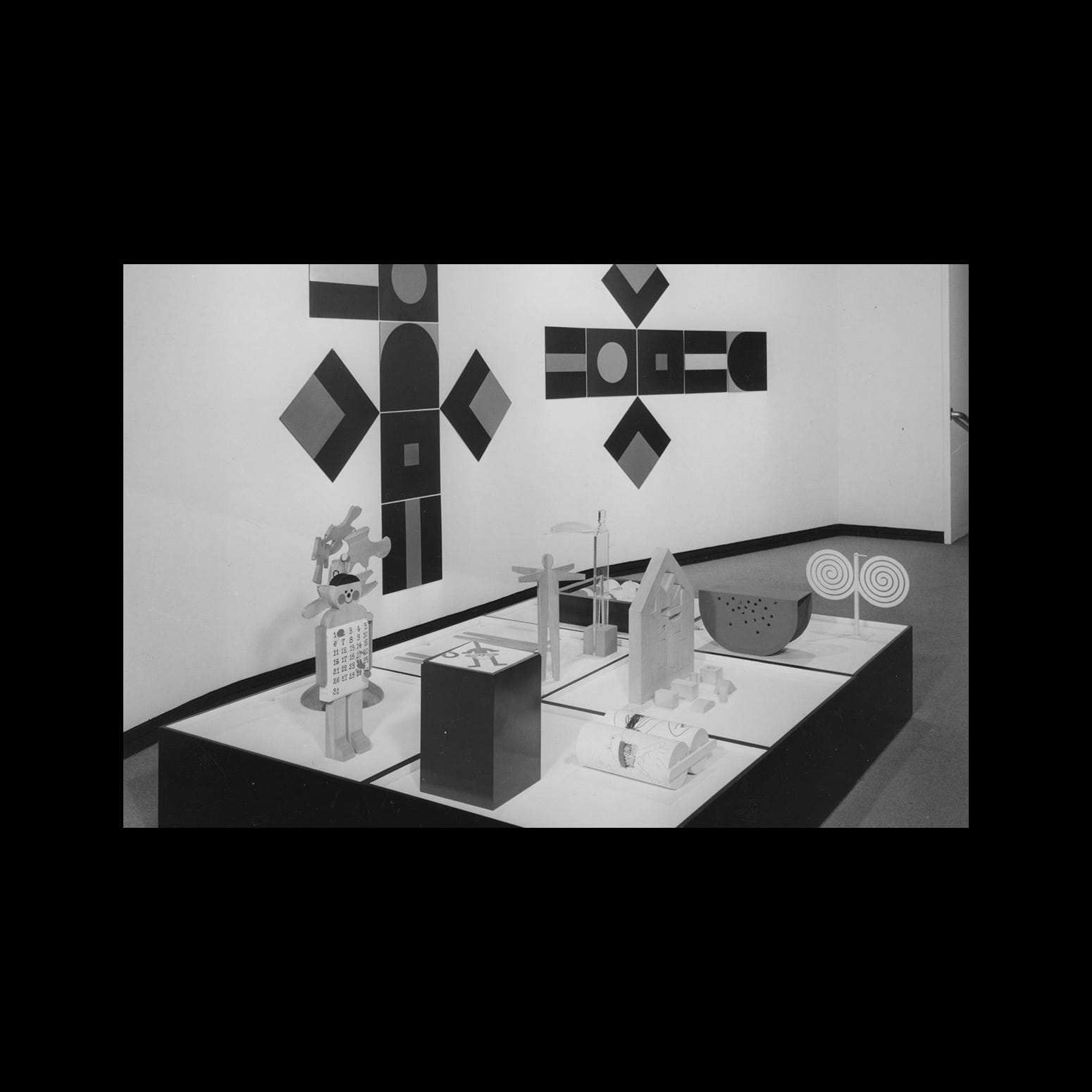
“Fukuda has used stylized animals, birds, trees and flowers in his toys. Many of them have other functions. A wooden man shown here can be a pencil holder. A camel becomes an egg stand and a cat becomes a bottle opener.”
(New York Post, Thursday, May 4, 1967)
"The show will delight elegantly simple children-and better still, elegantly simple adults.” – The New York Times, Saturday, May 13.
"‘Apple Tree’, one of 175 objects in Shigeo Fukuda's exhibit is doit-yourself sculpture, with movable parts.” – "Cue"_May 13.
“This show fuses in a totally successful fashion, art and objects of daily life. It demonstrates that there is no reason why we shouldn't be surrounded only by objects of great beauty”. – Stanley I. Deutsch, 57th Street Review, May 18.
“Above all, noteworthy is Maurice Blane's pointing out that there are no guns or war toys in this Japanese designer's work.” – The Villager, May 11.
This is not only an impression of the American citizens sensitive to the Vietnam War, but touches upon the true nature of Fukuda's works.
Introduction to the catalog
“The notion of play as a creative process has always intrigued me. On first seeing the work of Fukuda shigeo I was impressed with how felicitously it exemplified this concept. The seemingly endless variations which his work exhibits could, I believe, only be generated by a strong sense of play. His work is lively, full of joy and humor."
This is not to say that it is either frivolous or ephemeral; on the contrary, I feel that it can unquestionably be considered a genuine artistic expression.
Irrespective of the medium used, the products are characteristic of the finest Japanese craftsmanship. And even though the forms "feel" contemporary, they seem to me to embody those same qualities which make traditional Japanese design so distinguished.”
– Paul Rand
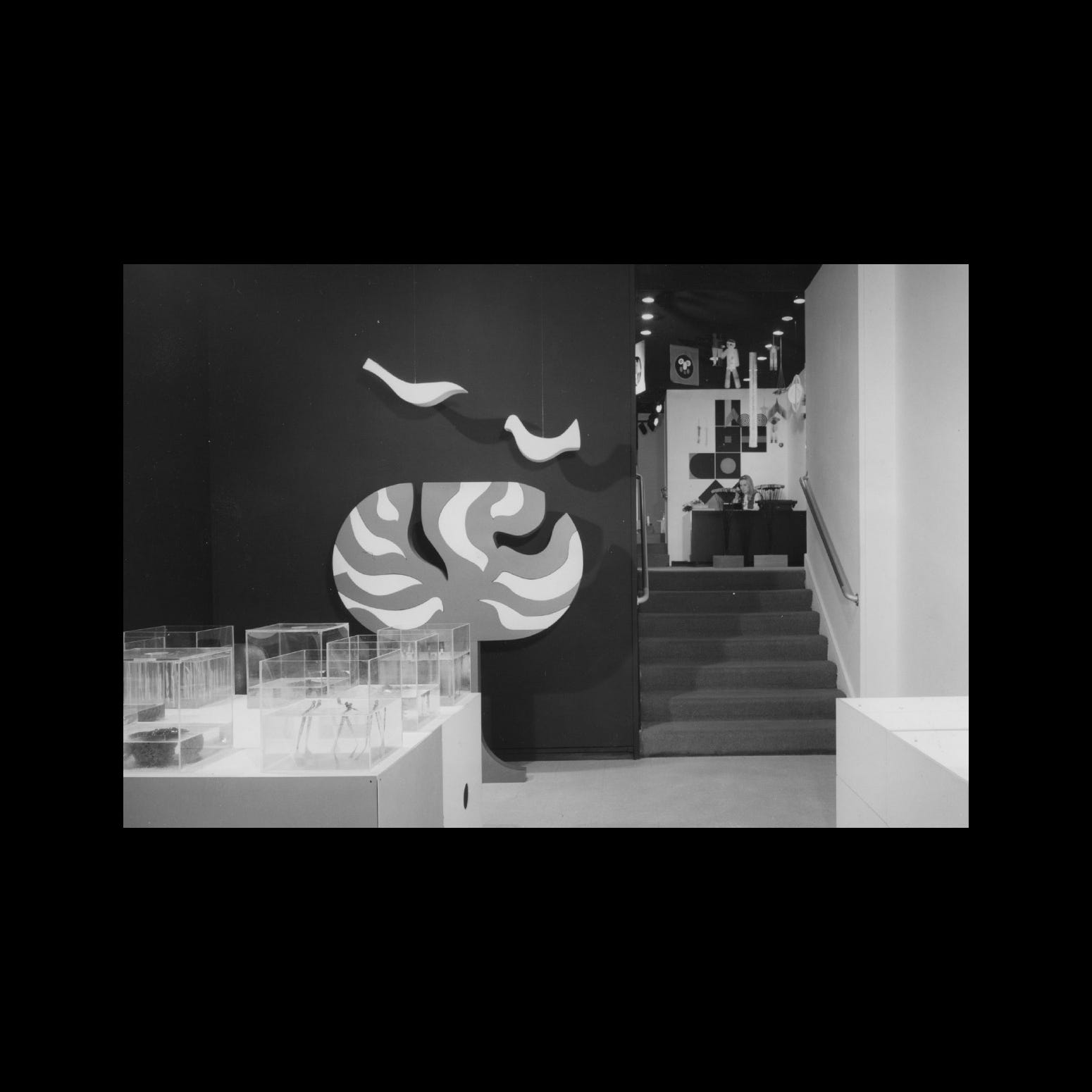
Fukuda Shigeo is one of the most promising young graphic designers in Japan. He was born in Tokyo in 1932 and graduated from Tokyo University of Arts and Music in 1956. Although he has not been working long, his design activities are full of variety, ranging from posters to picture books, from graphic symbols to three-dimensional trophies. He enjoys any design problem and designs everything with delight, but toy designs seem to be his favorite projects. For the past few years he has been hard at work in this field. The toys he designs are not toys as they are commonly known. Rather, they are toys for adults as well as children. They stem from graphic ideas. I like to call them three-dimensional graphics.
Bruno Munari and Enzo Mari of Italy are among the pioneers of three-dimensional graphics. Fukuda likes and respects these artists, but I doubt that he is directly influenced by them.
Fukuda was fortunate to have been born in an environment favorable to the development of a designer of three-dimensional graphics. His family was engaged in the manufacture of toys, and so he was able to use waste paper and other drawing materials as much as he liked in his childhood. Picture making and Origami (paper folding) were his daily pastimes.
This was in great contrast to the predicament of other boys and girls of his age, who experienced a shortage of such materials due to the war. These advantages helped him to broaden his interest from comic strips to picture books, and from picture books to toys.
Huizinga, the Dutch philosopher, wrote a book entitled "Homo Ludens" (playing man), in which he developed the theme that the existential meaning of human beings is to be found in the fact that they like to play. I think Fukuda has somewhat the same philosophy, and this may be a key to his three-dimensional graphic world.
Want more in-depth articles? Check out LogoHistories’ other articles on logos by Shigeo Fukuda →


Thank you for subscribing to Logo Histories. If you enjoy reading this short you may also enjoy these resources from the same team:
Brand Archive – Research tool for brand designers.
LogoArchive Website – Searchable modernist logo archive & research tool.
LogoArchive Shop – Vintage design books & LogoArchive Zines.
BP&O – Contemporary design editorial.