


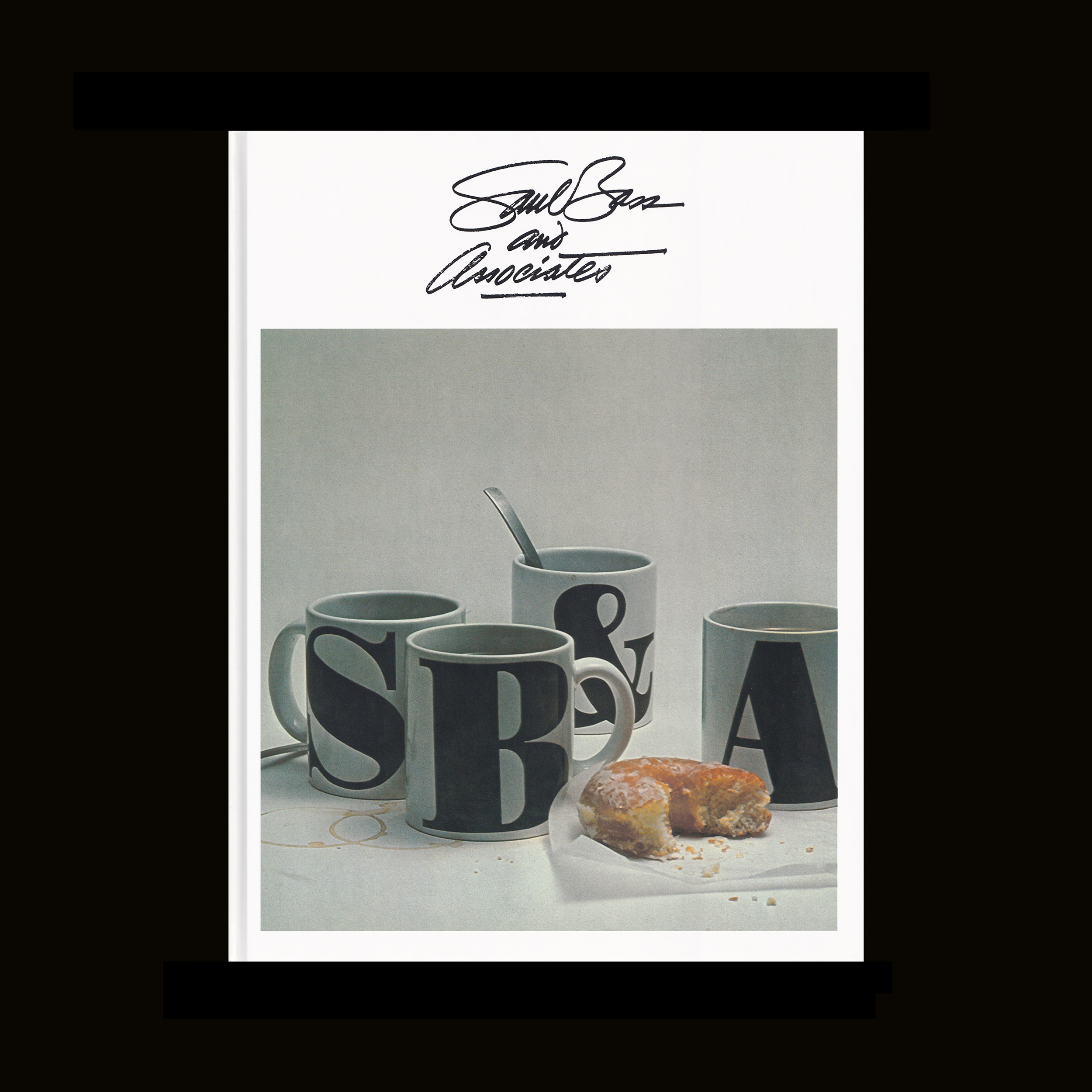
The following is an article published in Idea Archive 01, 1979. In it, Saul Bass & Associates introduce the people, the place and the point of view behind the studio.

In the late 1940's, Saul Bass left New York City and came to Los Angeles, California to seek his fortune. In those days the California sky was unmarred by smog, the gleaming sand beaches were usually empty and one could buy a large pitcher of freshly squeezed orange juice for 10¢.
He had come to work on advertising for motion pictures. His first home in Los Angeles was the Garden of Allah, a legendary hotel located smack in the middle of the Sunset Strip. It was the place where artists and literary refugees fresh from the East Coast stayed. Around the tiny swimming pool one could chat with Robert Benchley or drink with William Faulkner. It was a time of ferment and growth-all in all, an exciting place to be.
Explore more like this in Corporate Identity Design: Classic Case Studies →
Go behind the logos. Explore 200+ in-depth and meticulously researched logo histories revealing the designers, design decisions and ideas behind the world’s most iconic logos and important brand identities.
For young Bass it was particularly exhilarating. He made ads for movies. He was earning a good living. He got to meet famous actors, actresses and directors. He was having a heck of a good time. In those days movie advertising was a primitive art. The young art director from New York was bursting with new and sometimes strange ideas.
The movie world then, as it is now, was a small and inbred community. Word of this bright, fresh talent soon began to spread around town. Bass worked for the Blaine-Thompson Agency. By 1955, clients were coming to him rather than the agency. He went to the head of the office and asked for a modest raise. The answer was "be patient." So Bass went into business for himself. That was the beginning of Saul Bass & Associates.
Even in those early days Bass had a unique view of what he and his work were about. The typical interchange with the autocratic movie moguls who were his clients started with someone saying to him, “Saul, I want you to do thus and such." "That's fine," Saul would answer, "perhaps I'II do that, but first tell me what you want to say, who you want to say it to, and why you want to say it." For some, beginning at the beginning, minimizing or eliminating assumptions and questioning biases, was too much to accept, especially from this brash young upstart. But there were some clients who liked the questions and respected the intellect that was restless and continually probing.
The clients he attracted and the clients he kept were more often than not mavericks- men of vision and sometimes daring. It was director Otto Preminger who asked Saul to try and adapt his designs for "The Man With The Golden Arm" to the screen, so that the opening titles for the film and the advertising campaign would have continuity. When the film opened on Broadway in New York, only the jagged arm which was the trademark for the film appeared on the marquee-there were no words at all.

Nothing breeds success like success, someone once said. And the successes during those early years came with regularity. Sure, there were setbacks now and then. But they were remarkably few. Assignments were coming in from a broader market. The analytic approach and elegant execution were applicable to a wide range of selling problems. Package goods, chemicals, fibers, basic materials, all manner of products and services. Not just from Hollywood, but from California, New York and Chicago, and from Europe and the Far East.
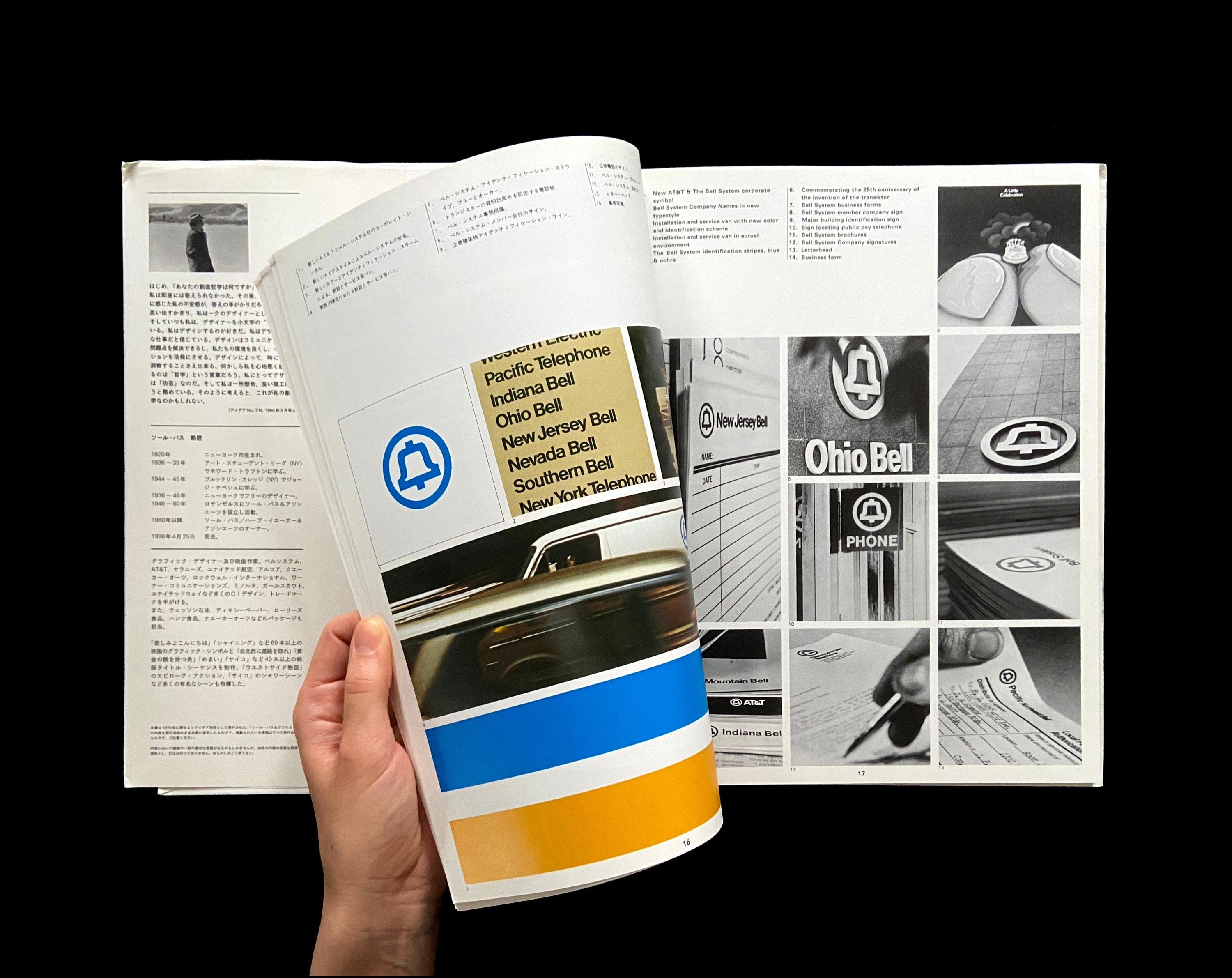
Corporate Identity had become an established discipline. And Saul Bass was one of the earliest and most distinguished practitioners. As the work gained more and more visibility, young designers came knocking at Bass' door, to learn their craft and to make important contributions. Among the first of a generation of designers to work with Bass was his long time "right arm," Art Goodman. An extraordinary talent in his own right, Goodman is now the firm's Design Director. Other long-time Bass associates, Production Supervisor Nancy Von Lauderback and Designer George Arakaki, are still with the firm.
During the late 1950's Bass hired a beautiful and talented young designer who was also recently arrived in Los Angeles from New York. Her name was Elaine Makatura and he thought she was so good that he married her.
Today, Saul Bass & Associates inhabits two comfortable buildings in the heart of Los Angeles. It's an informal place. In turn relaxed and frenetic, crackling with energy and activity. The interchange between Bass and his cohorts is constant. More often than not, lights burn at night and on weekends. And though he is past having to be there, Bass usually puts in more hours than any of his people Four years ago Bass took on a young partner. Herb Yager is not a designer. His background is as a writer and marketing executive who had worked for advertising agencies. According to Bass, Yager's addition is consistent with the Bass philosophy. "It's axiomatic that good designers should be expected to do nice looking designs. In my view the difference between good work and great work is the quality of thought that informs the work. Herb's role generally is to strengthen the overall management of the firm and specifically to contribute to our analytic capacity."
The firm's activities now cover the full range of the design spectrum with special emphasis on corporate identity programs, packaging and films. Despite the achievement, the awards, the respect of his peers, Saul Bass still works like a man who has something to prove. His light burns fiercely. "You know," says Bass, "it's nice having had a rewarding past, but the future is really what turns me on.
Learn about the corporate identities designed by Saul Bass for Minolta, AT&T, ALCOA and United Airlines at Logo Histories.
Want more in-depth articles? Check out LogoHistories’ other articles on logos by Saul Bass →


Thank you for subscribing to Logo Histories. If you enjoy reading this short you may also enjoy these resources from the same team:
Brand Archive – Research tool for brand designers.
LogoArchive Website – Searchable modernist logo archive & research tool.
LogoArchive Shop – Vintage design books & LogoArchive Zines.
BP&O – Contemporary design editorial.