


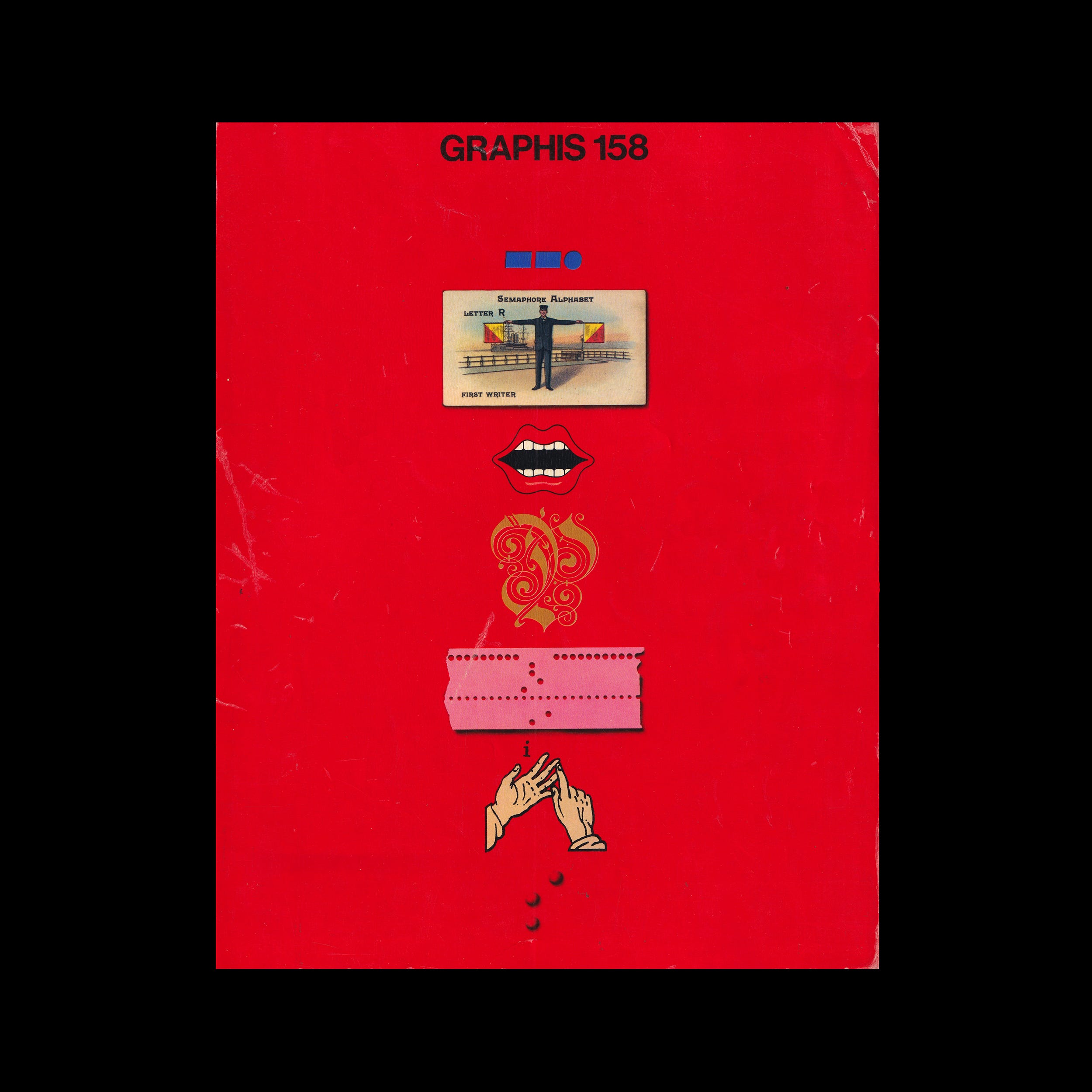
The following is an article published in Graphis 158, 1971. In it, Herbert Spencer writes about the formation of British design studio Pentagram.

Increasing complexity in the structure of society and industry during the past decade has accelerated changes in the practice of design. The recent merging of two well-established design offices, Crosby/Fletcher/Forbes and the industrial design practice of Kenneth Grange, under the title of Pentagram, reflects the contemporary need for coordinated design teams able to meet the challenge and opportunities of very large-scale exercises with diverse design abilities and sophistication in the services which they provide.
Pentagram activities are in three principal areas: buildings, interior and exhibition design; graphic design; and industrial design. The principals of Pentagram - the London-based partners (Theo Crosby, Kenneth Grange, Colin Forbes, Alan Fletcher, Mervyn Kurlansky) - and the head of the Swiss office in Zurich (Georg Staehelin), though different in their origins, training and ambitions, have worked together in various combinations for several years.
Go behind the logos. Explore 200+ in-depth and meticulously researched logo histories revealing the designers, design decisions and ideas behind the world’s most iconic logos and important brand identities.
There have in the past been many successful and distinguished two-man design partnerships, but even some of the most productive of such collaborations have often proved emotionally abrasive. Until recently a partnership composed of highly individual and original personalities would have seemed wholly unrealistic. It is perhaps a sign of the growing maturity of the profession as well as of the scale of contemporary design practice that they are confident that the new Pentagram partnership is both a rational and an entirely workable development of the close collaboration which they have already established on a wide variety of commissions.
Theo Crosby, who was born and educated in South Africa, is an architect who is perhaps best known for his work in exhibitions. His range of interests is enormously wide, and through his writings and his skill in convening exhibitions his influence in design and the graphic arts generally has been immense. Crosby's other principal contribution to the partnership has been in designing office interiors. Kenneth Grange, born in London, has also established a reputation in interior and exhibition design as well as for product design. His more recent work ranges from a sewing-machine for the Maruzen Sewing Machine Company of Osaka to a locomotive for British Rail.
Colin Forbes' early experience in teaching and design school administration prepared him for his co-ordinating role in the partnership. He especially concentrates on the design of information programmes and his work is distinguished by its clarity, logic and discipline. Alan Fletcher was a student of Paul Rand and Josef Albers at Yale. His work reflects the mixture of the 'problem solving' graphic designer and the individual artist, often preoccupied with geometry and colour. Mervyn Kurlansky was trained at the London County Council's Central School of Arts and Crafts and had established himself in freelance practice before joining Crosby/Fletcher/Forbes in 1969. His graphic designs echo an unashamedly romantic influence, while the work of Georg Staehelin, who is in charge of Pentagram's Zurich office, reflects his Swiss design education and his international working experience. These four graphic designers each bring to design problems a strongly personal approach combining the positive aspects of the American and European traditions in solutions which are at once both robust and eloquent.
The diverse talents of this group produce an atmosphere of creative stimulation in which original solutions flourish. But a common ground of ideas and design philosophy provides a sound foundation for each solution. Pentagram is, I think, almost unique among larger design offices in achieving in almost every one of its many design solutions something of the sparkle and the panache which, in earlier periods and under quite different social and economic conditions, the best of individual freelance designers were occasionally able to capture. The success of this group of designers in maintaining consistently high standards of analytical and creative thinking and originality as well as of formal design reveals rare organizational talents, too. Is it, then, that the Pentagram consortium is itself a brilliant design solution?
Want more in-depth articles? Check out LogoHistories’ other articles on Pentagram and its founders’ logos →


Thank you for subscribing to Logo Histories. If you enjoy reading this short you may also enjoy these resources from the same team:
Brand Archive – Research tool for brand designers.
LogoArchive Website – Searchable modernist logo archive & research tool.
LogoArchive Shop – Vintage design books & LogoArchive Zines.
BP&O – Contemporary design editorial.